
What Is PDR? Removing Dents Without Repainting – The Complete Guide
By Gennadij Tscherepanow · Dent removal expert · 14 September 2021
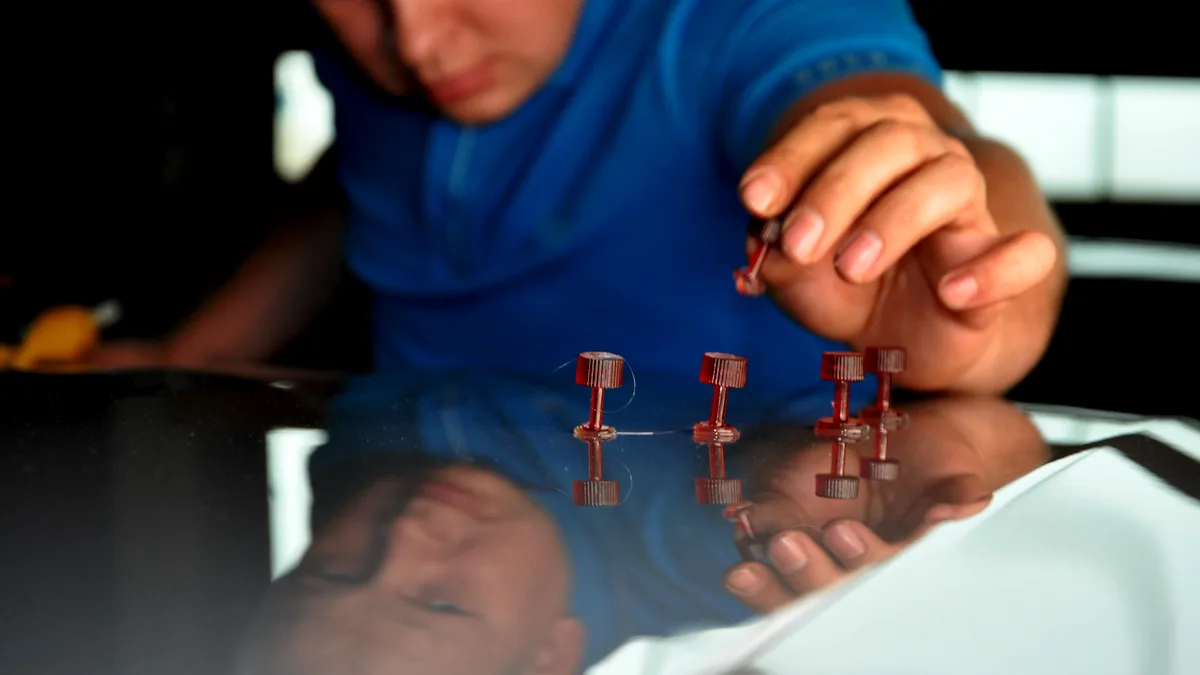
PDR stands for "Paintless Dent Repair" – removing dents without sanding, filler or repainting. Your car's original paint stays fully intact.
PDR stands for "Paintless Dent Repair", in German often called DOL – "dents without painting". It is a method to remove a dent from a car without sanding, without filler and without new paint. The technician gently pushes and massages the metal back into its original shape from the inside using special tools, so that the factory original paint stays completely intact. In this guide we explain in plain terms how dent removal works, where the technique comes from and why removing dents without repainting is the gentlest solution for your car and its value.
What exactly does PDR mean?
Paintless Dent Repair is the craft of reshaping dents and dings purely mechanically, instead of filling and repainting the damaged spot as in classic bodywork. In the conventional approach the dent is sanded out, filled with material and painted over – which takes time and intrudes on the original substance. With dent repair via PDR none of that happens: no sanding, no filler, no paint. Anyone who wants to remove a dent or get a dent out of a car keeps the entire original substance this way. The result is a surface that looks as if nothing ever happened.
How does dent removal without paint actually work?
The key lies in the physics of metal. Sheet metal deforms either elastically – then it springs back on its own – or plastically, in which case the deformation remains. It is exactly this plastic dent that the technician brings back into shape during dent removal, in a controlled way, millimetre by millimetre. Lever tools work the metal from the inside, or modern glue-pulling technique carefully draws it out from the outside. As long as the paint is intact and the metal has not been stretched or torn, the dent can be reshaped invisibly. Working a dent out is therefore not repair in the classic sense, but returning the metal to its original state.
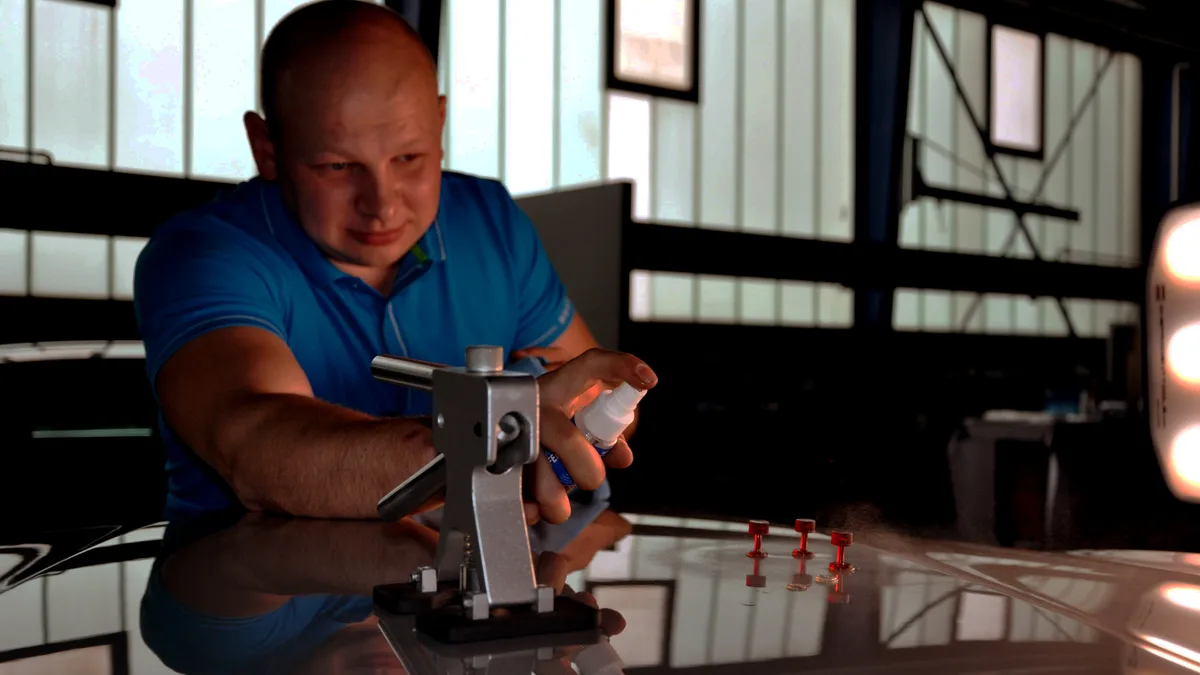
Why the original paint stays intact
With Paintless Dent Repair only the metal is moved, the paint layer is not removed. The factory paint is elastic enough to follow the gentle reshaping – provided it is not cracked or already repainted. This is exactly where the biggest advantage lies: your car keeps its original paint with the original layer thickness and colour structure. There is no colour mismatch, no blend zones, no filler spot in its history. This value retention is what makes dents without repainting so attractive, especially on newer and high-value vehicles.
A brief look into the history of dent removal
The roots lie in classic body-straightening technique. Frank T. Sargent systematised metal bumping as early as 1931 in his work "The Key to Metal Bumping". The modern paint-free method, however, emerged in the 1950s and 1960s at Mercedes-Benz. Oskar Flaig is considered the inventor: in 1960, at a trade fair in New York, he pushed out show dents overnight from the inside with a hammer handle – entirely without repainting. Mercedes turned this into internal training, from the late 1970s the technique reached the USA and spread from there around the world.
From wooden handle to high-tech tooling
What began with a simple hammer handle is today a precise craft. The first wooden handles became alloyed steel hooks in hundreds of shapes and lengths, joined by glue-pulling technique with a slide hammer and light systems that project reflection lines onto the body. These light lines are the technician's eye: when they distort, they show exactly where the metal is not yet right. Only when the lines run straight again is the dent truly gone. This is how modern dent removal combines decades of experience with fine technology.
Which dents can be removed – and which cannot?
Ideal for PDR are round, smooth dents without a sharp core: classic parking dents and door-edge hits, but also many small hail dents on the roof, bonnet and boot. Even dents on swage lines and body lines can be worked out, but they demand great skill. The method reaches its limits when the paint is cracked, the metal shows sharp kinks or folds, the dent sits right at the edge or on a bonded seam, or when high-strength structural parts are involved. Old filler spots and areas with built-in sensors also require special assessment.
How a professional dent repair proceeds
First the technician projects reflection lines onto the metal to read the dent precisely. Then he gains access – through factory openings, seals or by carefully removing a trim panel. With lever tools he pushes the metal from the inside, or he pulls it out with glue-pulling from the outside. If small high spots appear, they are levelled again with fine tapping; for large distortions controlled heat helps. Finally comes the fine finishing, until the light lines run perfectly straight again and the factory structure is restored.
A dent or hail damage on your car?
Just send a photo — the master inspects your car personally and calls back with an honest assessment. Within 2 hours, Mon–Fri 10–16. No automatic price.
Steel, aluminium and why heat comes into play
Not every panel reacts the same way. Steel has a certain springback and works well during dent removal. Aluminium, by contrast, is tough and hardens quickly when deformed, becoming more brittle – this is called work hardening. That is why aluminium is heated in a controlled way to around 80 to 100 degrees during car dent removal, so that metal and paint become more pliable. The clear coat also tolerates only limited stretching; old, oxidised or already repainted paint cracks more easily. Experience with each material therefore strongly influences the outcome.
The advantages of PDR at a glance
The biggest plus is the preservation of original paint and factory substance – this protects resale value, because neither filler nor repainting enters the vehicle's history. Added to that is speed: many dents are done in hours rather than days. PDR is also environmentally friendly, since no paints, solvents or VOCs are used. And especially with hail, the method often saves the whole car from being written off, because even many dents can be repaired economically.
Typical use cases: hail, parking dents and smart repair
In practice we encounter PDR mainly in three areas. Hail damage is the ideal PDR field, because many round dents sit on large, easily accessible surfaces – and hail is a classic comprehensive-cover case that usually does not affect your no-claims discount. Parking dents and door dings from the neighbouring car are the second classic. And within smart repair, smaller damage can be fixed precisely and economically. In all these cases the rule applies: as long as the paint is intact, the chances for a paint-free repair are good.
What does removing a dent cost?
An honest answer up front: there is no flat-rate price and no serious online calculator that could assess a dent from a distance. Every dent is different – size, location, depth, material and accessibility determine the effort. That is why at our shop the master assesses every dent in your car personally from a photo and gets back to you with an honest estimate. That way you know exactly where you stand – without guesswork and without surprises. Feel free to send us a photo of your dent.
FAQ
What is a dent technician?
A dent technician is a specialist in paint-free reshaping of body dents. Using lever and glue-pulling technique he brings the metal back into its original shape in a controlled way, without sanding, filling or painting. The work requires great experience, a trained eye and a fine touch – every dent is assessed individually.
What can a dent doctor do?
A dent doctor removes dents and dings as long as the paint is intact – that is parking dents, door-edge hits and above all hail dents. He works the metal out from the inside or with glue-pulling and restores the surface without new paint. With cracked paint or sharp kinks the method reaches its limits; the master assesses that case by case.
Which dents are easy to remove?
The easiest are round, smooth dents without a sharp core on easily accessible surfaces such as the roof, bonnet, doors and boot – that is classic parking dents and many hail dents. Dents on edges, swage lines or with sharp kinks are harder. What is always decisive is that the paint is undamaged.
Does the original paint really stay intact during dent repair?
Yes. With Paintless Dent Repair only the metal is moved, the paint layer remains untouched. The condition is that the paint is not cracked and the metal not over-stretched. This way your car keeps its factory paint with the original colour and layer thickness – without blend zones or colour differences.
Is hail damage covered by insurance?
Hail is usually a classic comprehensive-cover case and mostly does not lead to a downgrade, so your no-claims discount stays intact. Insurers work with tables and expert reports on the number and size of dents. Report the damage promptly and ask your insurer directly about the applicable deadline.
How quickly do I get an assessment of my dent?
Simply send us a photo of your dent. The master assesses it personally and calls you back within two hours (Mon–Fri, 10 am–4 pm) – with an honest estimate, without an automatic price and without an online calculator.